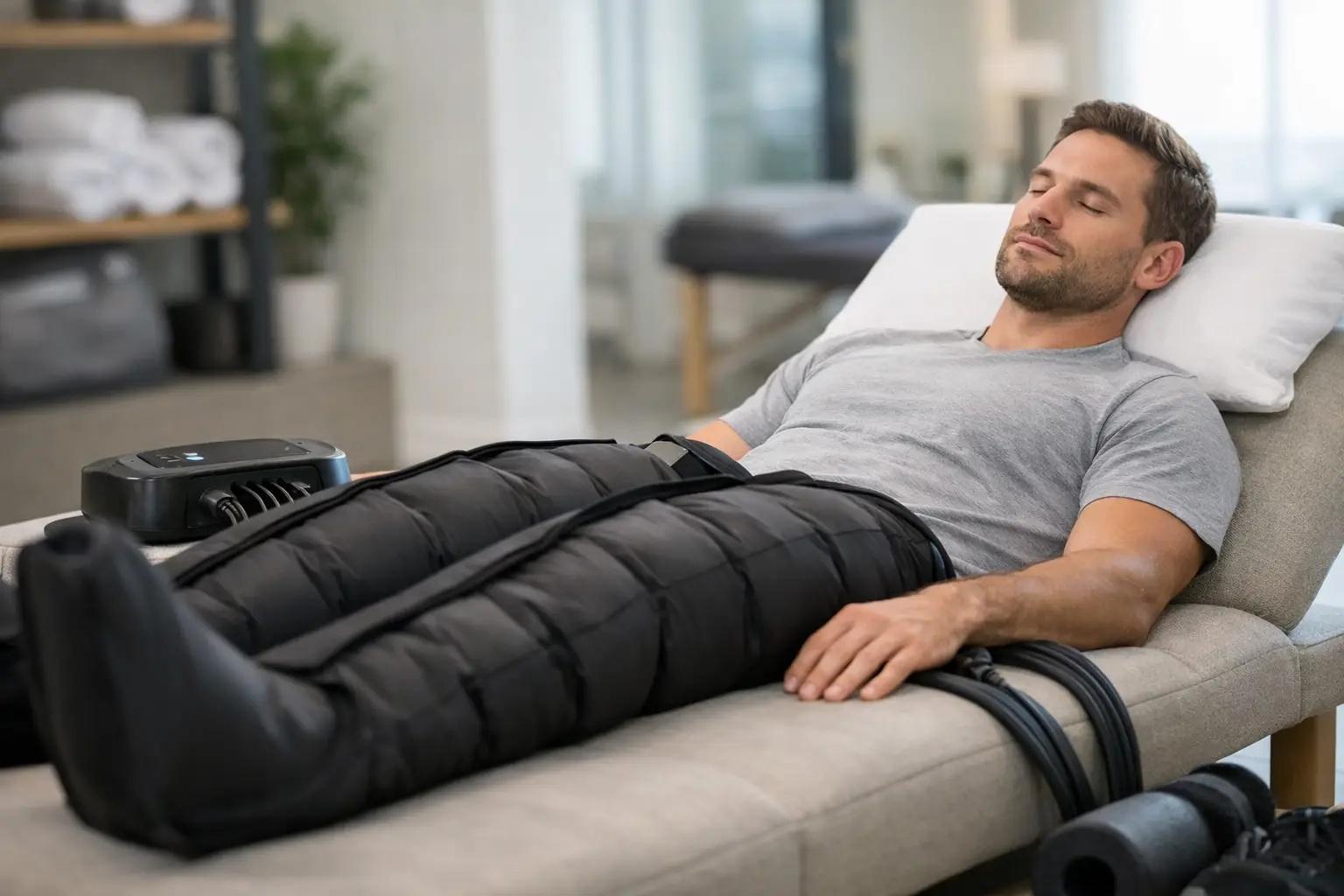
Your legs do not need to feel wrecked for two days after a hard lift, long run, tournament, or work week. This compression therapy recovery guide explains how Normatec-style compression can fit into a smarter recovery routine, whether you are training for performance, chasing consistent workouts, or simply ready to feel less heavy and more mobile.
Compression therapy is fast, non-invasive, and easy to schedule around real life. But the best results come from using it with intention, not treating it as a replacement for sleep, hydration, mobility, or appropriate medical care.
What Compression Therapy Does
Compression therapy uses inflatable sleeves that apply pulsing pressure to areas such as the feet, calves, thighs, hips, or arms. The pressure moves in cycles, gently squeezing and releasing rather than holding one constant level of compression.
For many active people, that rhythmic pressure feels like a deep, controlled flush after training. It can support circulation, help reduce the sensation of heaviness in the limbs, and promote relaxation after demanding activity. A session may also be useful when travel, long periods of sitting, standing shifts, or intense practices leave your legs feeling tight and fatigued.
The key word is support. Compression therapy can be a valuable recovery tool, but it does not erase poor sleep, make up for chronic under-fueling, or fix an injury that needs assessment. Think of it as one strong part of your recovery system.
Compression Therapy Recovery Guide: When to Book
Timing depends on what your body is asking for. There is no single perfect schedule for every athlete, parent, professional, or weekend warrior.
After a hard workout, many people choose compression therapy the same day or within 24 hours. This can be especially appealing after leg day, a long run, cycling, field sports, court sports, or an event with repeated sprinting. The goal is not to force your body to recover on a deadline. It is to give sore, tired muscles a focused recovery window while you slow down.
Before training, a shorter session may feel helpful when your legs are stiff from travel, sitting at a desk, or a previous workout. Keep expectations realistic. Compression is not a substitute for a warm-up. You still need movement that raises body temperature and prepares your joints, muscles, and nervous system for the work ahead.
For active professionals, a session on a rest day can be just as valuable. If your work keeps you on your feet all day, your recovery needs may have less to do with sports and more to do with managing accumulated fatigue. The same is true for parents, nurses, first responders, and anyone who spends long hours moving or standing.
Youth athletes can benefit from recovery habits, too, particularly during dense practice and competition seasons. Parents should keep the focus on comfort, consistency, sleep, nutrition, hydration, and communication with coaches or healthcare professionals. Recovery should help young athletes play their best, not push them through pain that needs attention.
How to Get More From Each Session
Walk into your session with a simple purpose. Maybe your calves feel loaded after hill repeats. Maybe your quads are tired from a tournament weekend. Maybe your legs are not sore, but they feel sluggish after a flight. Naming the goal helps you build better recovery habits over time.
Wear comfortable clothing and give yourself a few minutes afterward before jumping back into a stressful schedule. Compression therapy works well when paired with calm breathing and a brief reset from screens, errands, and training pressure. That mental downshift matters. Recovery is not only about muscles.
Hydration is another practical piece. Drink water consistently throughout the day, especially after sweating heavily. Add a balanced meal or snack with protein and carbohydrates after demanding training when appropriate. Compression therapy may feel great, but your body still needs the raw materials to repair and adapt.
Pay attention to how you feel later that day and at your next workout. You may notice your legs feel lighter, less stiff, or more ready to move. If a particular timing works well, make it part of your routine. If it does not change how you feel, adjust the timing, frequency, or other recovery basics before assuming you need more intensity.
Build Recovery Around Your Training Load
The people who get the most from recovery services are not always the ones training the hardest. They are the ones who pay attention to total load.
A heavy week can include more than workouts. Poor sleep, work deadlines, travel, heat, school schedules, stress, and time on your feet all affect how recovered you feel. A person who trains four days a week but sleeps poorly may need more recovery support than someone training six days with excellent sleep and nutrition.
Use compression therapy after your highest-demand days or during your busiest stretches. For example, a recreational runner may schedule a session after a long run or race. A strength athlete may use it after lower-body training. A soccer, baseball, volleyball, or basketball player may book after a tournament weekend when repeated games stack up fast.
There is also value in routine. One session can feel good, but regular recovery appointments can make it easier to stay connected to your body. You begin to notice when tightness is normal, when fatigue is building, and when it may be time to reduce training volume instead of powering through.
Pair Compression With the Right Modalities
Recovery does not have to be one-size-fits-all. At Kori Kryotherapy, compression therapy can fit into a broader appointment-based plan built around your goals, schedule, and how your body feels that day.
If you are dealing with post-workout soreness and want a cooling reset, whole-body or local cryotherapy may be a good complement. If restricted movement is the bigger issue, guided stretch therapy, percussion massage, cupping, or scraping may better match your needs. Hot and cold plunge therapy can also offer a powerful reset for people who respond well to temperature contrast.
The trade-off is simple: doing every modality in one visit is not always necessary. More is not automatically better. Choose the service that matches your training load and recovery need, then give your body time to respond. A focused plan is easier to maintain than a complicated routine you cannot fit into your week.
When Compression Therapy Is Not the Right Choice
Compression therapy is generally comfortable for many people, but it is not appropriate for every situation. Do not use it to ignore sharp pain, a suspected fracture, a serious muscle tear, sudden swelling, numbness, or unexplained changes in skin color or temperature.
People with known blood clots or a history of deep vein thrombosis, severe peripheral artery disease, certain heart or circulation conditions, active infection, or other significant medical concerns should speak with a qualified healthcare professional before using compression therapy. If one leg is suddenly more swollen, painful, red, or warm than the other, seek medical evaluation rather than booking a recovery session.
Pregnancy, recent surgery, and ongoing injury rehabilitation can also require individualized guidance. Recovery services are designed to support how you feel and move, not to diagnose or treat medical conditions.
A Simple Weekly Recovery Rhythm
A sustainable plan often looks better than an aggressive one. After your toughest lower-body day or long endurance session, schedule compression therapy to help your legs decompress. On another day, use easy walking, mobility work, quality meals, and an earlier bedtime to create a real recovery foundation.
During high-volume weeks, add an appointment when fatigue starts to build rather than waiting until you feel completely drained. During lighter weeks, keep recovery simple and use the extra time to evaluate how your body responds to your current training plan.
The best recovery routine is the one that helps you show up consistently. Give your body a focused hour, listen to the signals it gives back, and let every session support the next strong day.